
For years, women’s health research and development (R&D) has been underinvested in and underrepresented, despite the $1 trillion opportunity that could be realized by closing this gap. This doesn’t need to be the norm.
Camber is building the infrastructure that turns women’s health priorities into funded, coordinated action.
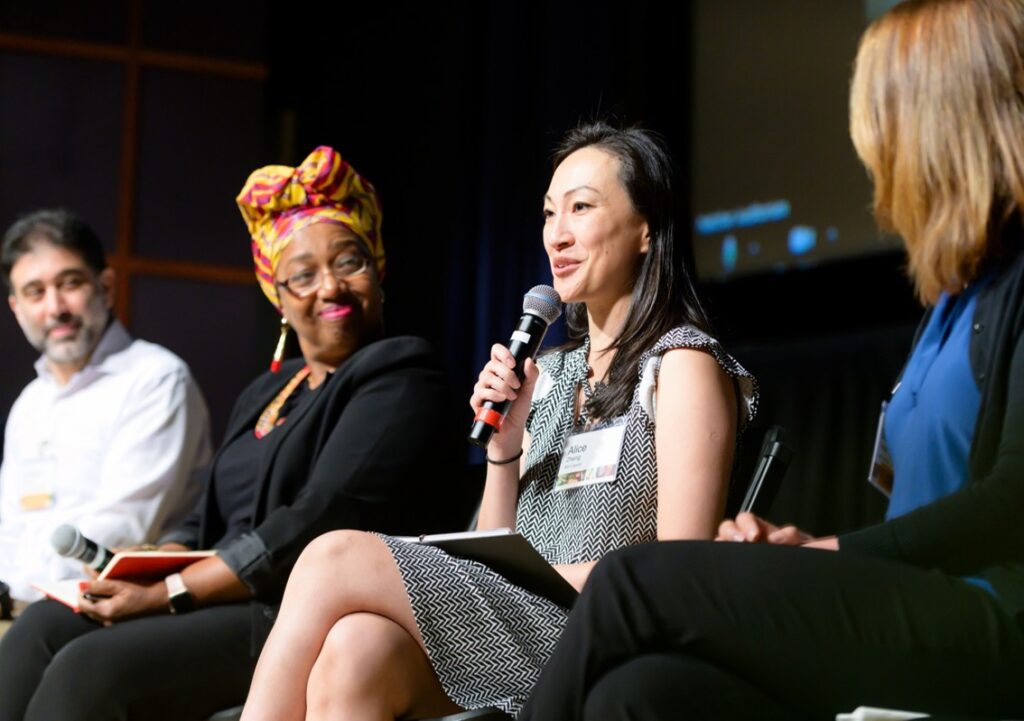
Since 2023, in partnership with the Gates Foundation and the United States National Institutes of Health (NIH), we’ve served as the backbone convener for the Innovation Equity Forum (IEF) — a global community of 400+ researchers, innovators, advocates, and funders working to close the innovation and investment gap in women’s health. So far, the IEF has strengthened awareness of critical R&D gaps across academia, philanthropy, the private sector, and policy circles.
The Challenge
Women’s health has never received the attention, funding, or urgency it demands. Despite impacting half the world’s population, the conditions that affect women uniquely, differently, or disproportionately have been treated as a niche within health research and development for generations. Transforming this framing could improve the lives of millions of women and girls worldwide and boost the global economy by an estimated $1 trillion annually by 2040.
The field’s highest-return priorities are now well defined through the Opportunity Map. However, capital deployment against them remains fragmented and inconsistent. Although convening platforms exist, the field has not yet fully leveraged them to align stakeholders around a shared agenda or to drive collective action. In addition, innovation in women’s health stays oriented to high-income markets across the R&D lifecycle — what receives funding, how products get designed, who informs that design, when they reach patients — resulting in solutions that are retrofitted rather than built for the low- and middle-income contexts carrying the greatest burden.
Our Role
Camber is working toward a reality where women’s health is embedded across health innovation and R&D as a core driver of population health and economic participation. Capital should be systematically aligned to the highest-impact priorities and solutions should be designed with, by, and for the populations carrying the greatest burden.
We advance that vision in four ways:
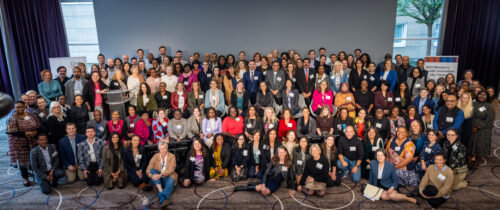
Convening and aligning field actors around shared priorities. We bring deep women’s health expertise, ecosystem-wide knowledge, and trusted relationships across funders, scientists, and advocates to convene the field around a common agenda rather than parallel ones.
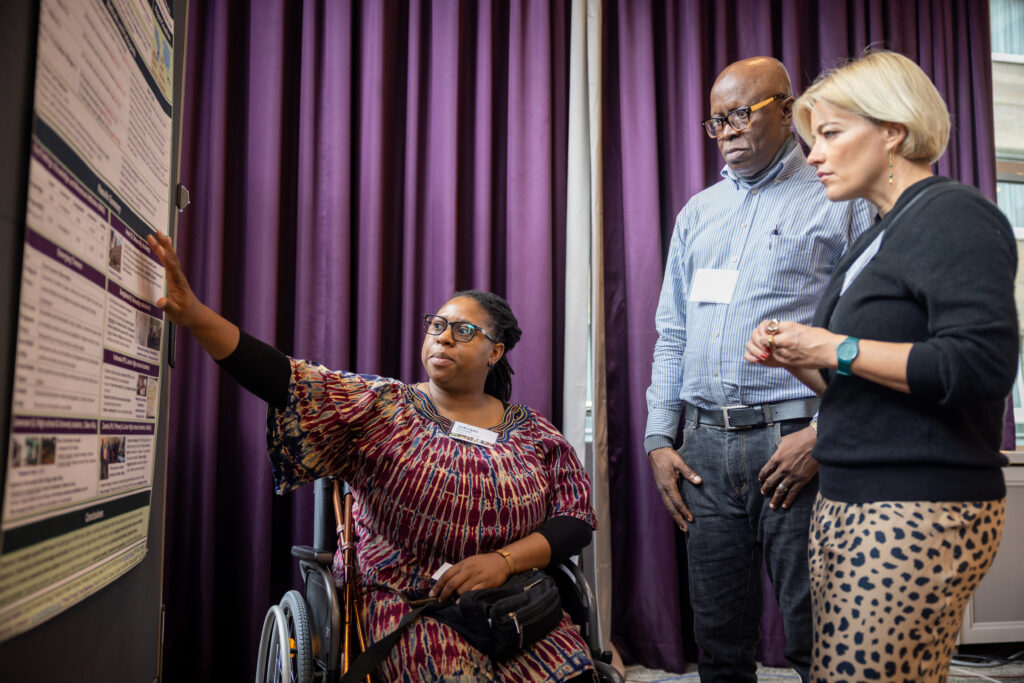
Building the structure and coordination to translate priorities into action. We build the infrastructure the field has been missing with shared platforms that let funders, innovators, and policymakers turn a common agenda into coordinated investment and execution.
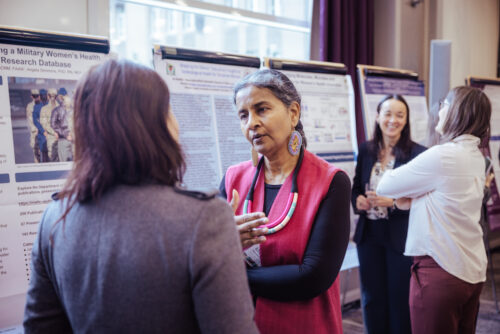
Shaping opportunities into investment-ready concepts that attract capital. We turn priority opportunities into concepts specific enough for funders, scientists, and organizations to fund, lead, and implement.

Mobilizing resources and aligning capital behind them. We work to align capital to the field’s priority opportunities, accelerating progress against the women’s health outcomes that matter most.
Impact to Date
Camber has helped shift women’s health innovation from aspiration to measurement and coordinated action. That year, Camber partnered with the Gates Foundation and NIH to launch the Innovation Equity Forum and lead the prioritization process behind the Women’s Health Innovation Opportunity Map — the field’s first shared agenda for women’s health innovation that spans the full women’s health R&D landscape and puts LMICs and equity at its core.
In 2024,
Camber published the field’s first Progress Report against those 50 priorities, institutionalizing accountability by tracking both advances and persistent gaps.
By 2025,
This shared agenda and accountability into action and sustained progress. We guided stakeholders to launch four action products against the Opportunity Map — discovery and development networks for gynecological and cardiometabolic conditions, a data harmonization pilot for sex-intentional data collection, a women’s health innovation fund, and a collaborative knowledge hub — and published womenshealthinnovation.org to house IEF publications and resources, including a women’s health funding tracker.
Today,
Camber has continued to provide backbone support for the IEF focused on knowledge exchange, connectivity, catalytic collaboration, and subgrants for initiatives aligned with IEF priorities. We are also facilitating the design of the Gynecology Discovery and Development Network (GynDDN), convening experts globally to build a blueprint for the precompetitive, open-science research infrastructure the field needs — one with equitable participation across high-, middle-, and low-income settings — to make gynecological research cumulative, globally representative, and discovery-ready.
By moving the field from aspiration to measurement and coordinated action, Camber has helped lay the foundation for sustained progress and accelerated innovation in women’s health worldwide.



Partner With Us
We work with changemakers across the social sector—from local non-profits to global multilaterals—to drive measurable impact.