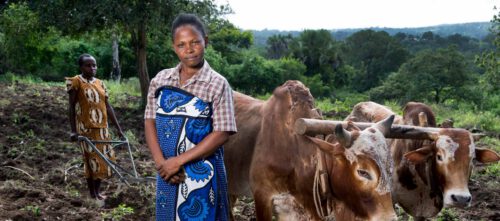
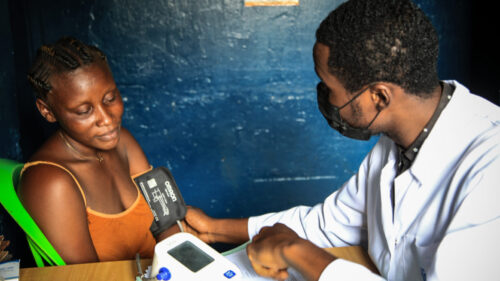
With Camber’s support, the Nigeria CAS (N-CAS) was piloted in Nigeria in 2025, integrating multiple interventions into the country’s largest-ever measles and rubella campaign, reaching 20.3 million people and cutting per-child vaccination costs by nearly a quarter.
This work addresses a major bottleneck in global health delivery: Siloed, disease-specific health campaign financing can be inefficient, costly, and diminish the reach of critical health interventions locally and globally.
20.3M
people reached
$4.1M
in cost-savings
80%
coverage
46
countries engaged to date
The Challenge
Globally, governments and health funders spend billions of dollars on health campaigns each year. Immunizations alone cost an estimated $112.4B from 2000-2017, and are projected to total more than $42B from 2021-2030 for just 10 vaccines. Disease-specific campaigns often rely on separate workforces, supply chains, and data systems, driving up operational costs and missing opportunities to co-deliver services. At scale, these parallel systems impose staggering costs for governments and fragment local health systems. These gaps leave millions without reliable access to critical care and risk deepening long-standing health inequities.
To truly strengthen health systems, local governments require hands-on support to increase coordination and improve resource efficiency, data tracking, and delivery. The Health Campaign Effectiveness (HCE) Coalition, incubated within the Task Force for Global Health, is driving this change. In 2023, the Coalition approached Camber with the challenge of devising a clear, actionable, and replicable strategy for bridging coordination gaps across health programs.
For more than 25 years, disease-specific campaign financing has fragmented local health systems, leaving millions without reliable access to critical care.
Our Approach
Since 2023, Camber has served as secretariat support for the HCE Coalition, a consortium of 80 organizations worldwide. We’ve helped move the coalition from agenda to action through a multi-phased approach:
Aligning Stakeholders: The Collaborative Action Strategy
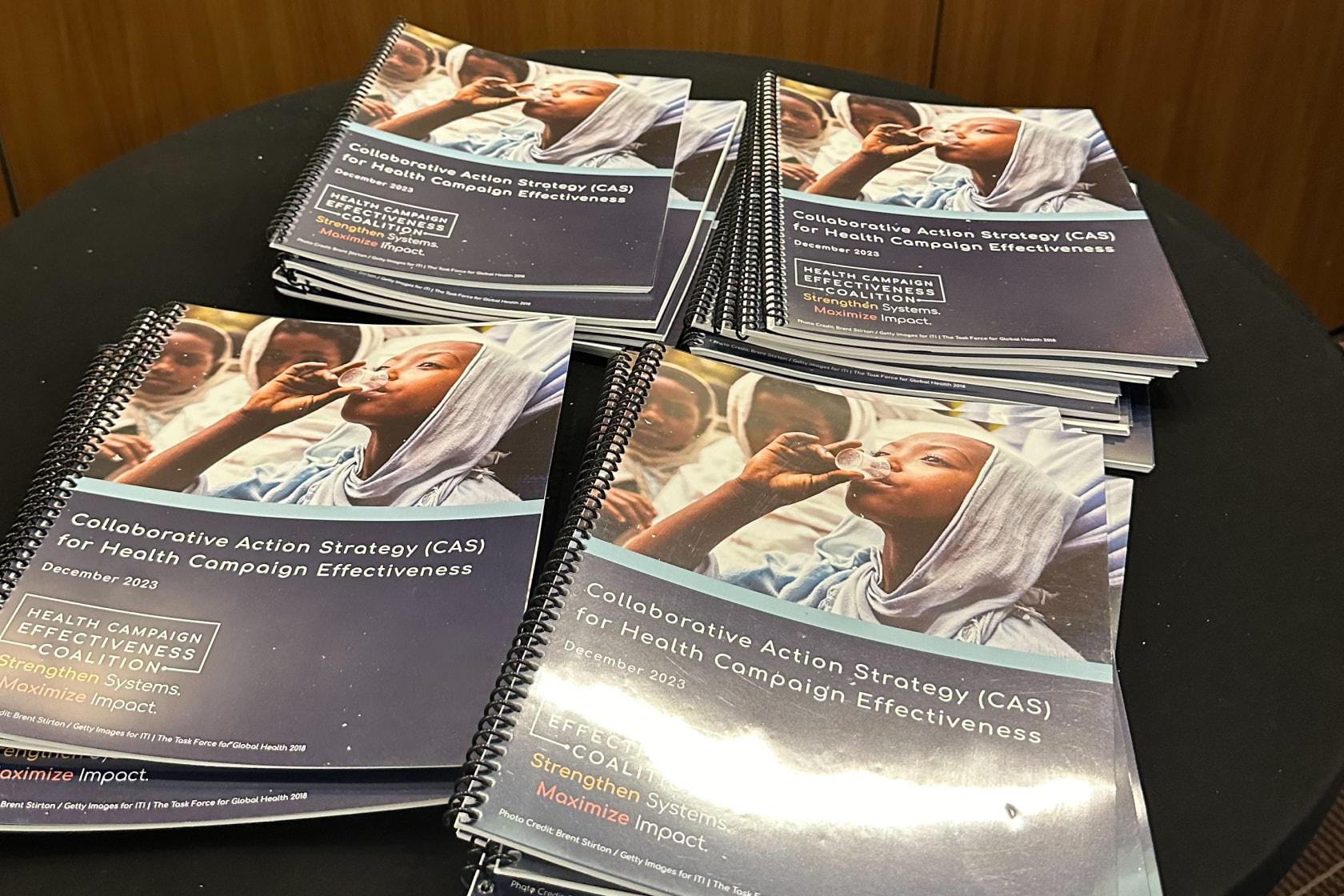
In the first year, Camber led the development of the Collaborative Action Strategy (CAS), a 5-year strategy to strengthen every stage of the campaign value chain, from planning and financing to implementation and evaluation. Development required Camber to launch and lead a series of task teams representing over 50 global, regional, and country-level experts. Camber’s advocacy resulted in significant Global South representation, ensuring equitable representation in the strategy.
Activating Operations: Piloting the CAS in Nigeria
Following the CAS’s development, the Coalition selected countries to pilot the strategy, starting with Nigeria. Over the course of 18 months, we worked closely with Nigeria’s Federal Ministry of Health and Social Welfare and the National Primary Healthcare Development Agency to adapt the global CAS into the N-CAS, a customized plan built to reflect Nigeria’s unique priorities and constraints.
Executing Change: The 2025 MR Campaign
In 2025, the N-CAS was piloted in four states in Nigeria – Kano, Oyo, Yobe, and Akwa Ibom – to support the integration of polio, malaria, and NTD campaigns into the largest measles and rubella vaccination campaign in the country’s history, which reached over 100 million children. During the campaign, the Camber team spent extensive time on the ground with government and delivery partners to tackle and address challenges in real-time.
The N-CAS was piloted to support integrated delivery and coordination during the largest measles and rubella vaccination campaign in the country’s history.
Impact & Outcomes
The work of HCE has translated into measurable results for communities. In Nigeria, the October 2025 campaign resulted in 20.3M people receiving Measles, Rubella, and Polio vaccinations – 16 percentage points higher than the original target. Localities where the N-CAS was rolled out achieved 80% coverage for Neglected Tropical Diseases (NTD) services – or up to 812Kadditionalpeople. Together, effective integration cut costs by up to 23%perchild vaccinated, saving over $4.1M for the Nigerian health system.
The success of the Nigeria pilot is driving further commitments and scale globally. Since launch, Camber’s support has…
Health campaigns are a critical tool for tackling a range of public health issues, from measles to nutrition — but they don’t have to run in isolation to be effective. Since 2023, the Health Campaign Effectiveness Coalition has demonstrated that future campaigns can be more collaborative, efficient, and impactful. Through initiatives like this, a sustainable health system is within reach.
Partner With Us
We work with changemakers across the social sector—from local non-profits to global multilaterals—to drive measurable impact.